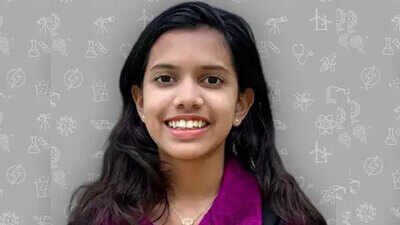
Most people walk past mussels without giving it a second thought. However, these tiny shellfish possess an extraordinary ability that has fascinated scientists for decades – they can stick to rocks even when buffeted by powerful waves, thanks to the natural adhesive they produce.For Aaisha Asif, a 12-year-old sixth-grader at Pine View School in Florida, this extraordinary ability became the starting point for an idea that could one day make everyday adhesives cleaner and more environmentally friendly.Her project, “The Muscle Strength of Mussels,” placed her among 10 finalists in the 2026 3M Young Scientist Challenge, one of the nation’s premier science competitions for middle school students. The finalists will compete later this year for the title of America’s Top Young Scientist and the grand prize of $25,000.
Learning from nature to solve modern problems
From home repair to packaging, construction and manufacturing, adhesives are used almost everywhere. However, many traditional adhesives contain chemicals such as volatile organic compounds (VOCs) that can evaporate into the air, causing pollution and causing health concerns in enclosed environments.Instead of looking for complex industrial solutions, Ayesha looked to nature.Her idea was to use natural proteins and iron-based cross-linkers to develop a mussel-inspired adhesive that could form strong bonds while reducing reliance on harmful chemicals.In her competition profile, Aaisha explained that she wanted to develop a safer and more sustainable alternative without compromising the performance of different surfaces.“I entered the 3M Young Scientist Challenge because I love creating real solutions to everyday problems by drawing inspiration from the world around me,” she said.She hopes the competition will help her refine her research through mentorship from experienced scientists while also improving the practical applications of the materials.“I’m particularly looking forward to guidance and feedback from professionals, as it can help me see gaps in my approach and improve how the material performs for people actually affected by real-world challenges,” she said.
Why scientists are fascinated by mussels
Ayesha’s idea is based on a scientific concept called biomimicry – designing new technologies by learning from nature.Mussels survive in one of the harshest environments imaginable. Despite constant exposure to sea water and waves, they still cling firmly to rocks using special adhesive proteins. Scientists around the world have spent years studying these natural bonding mechanisms because they could inspire safer medical glues, underwater adhesives and environmentally friendly industrial materials.Ayesha hopes her project will contribute to this growing field by creating an adhesive that is both effective and more environmentally friendly.
A summer of mentorship and innovation
As part of the competition, each finalist is paired with a 3M scientist who helps develop the project prior to final judging.Aaisha will be mentored by Dr. Rohit Gupta, 3M Semiconductor Marketing Manager, who previously worked in research and development creating adhesive materials for electric vehicle batteries and sustainable materials technologies.A polymer scientist with multiple patents and multiple innovation awards, Gupta is also active in mentoring young students through STEM projects. Over the next few months, he will help Aaisha strengthen her project, which she will then present at the 3M Innovation Center in St. Paul, Minnesota, where the finalists will present their work in October.
Science starts with curiosity
For Ayesha, science is not limited to the laboratory.When asked about her favorite invention of the past century, she chose CRISPR gene-editing technology, admiring its ability to precisely modify DNA and potentially transform medicine and agriculture.She believes scientific discoveries inspired by natural biological systems can solve some of humanity’s biggest challenges—from treating genetic diseases to developing crops that are better able to withstand drought and disease.Every long-term ambition reflects this mindset.“After 15 years, I aspire to be an environmental scientist because I am passionate about studying nature and keeping it clean and sustainable,” she said. “By working together, I hope to contribute to meaningful solutions and help make a positive impact on the world through science, technology and innovation.”A quote from famed inventor and architect Buckminster Fuller perhaps best sums up her approach:“You never change things by fighting the existing reality. To change something requires building a new model that renders the existing model obsolete.”
Young people solving real world problems
The 3M Young Scientist Challenge, organized by Discovery Education and 3M, encourages students in grades 5 through 8 to identify everyday problems and develop science-based solutions. Finalists are selected based on the originality of their ideas, scientific thinking and communication skills, and then work with professional scientists to refine their innovations.While many children dream of becoming scientists in the future, Elsa has already taken the first step – using observation, creativity and perseverance to solve environmental problems through science.It remains to be seen whether each of the mussel-inspired adhesives will eventually find its way into homes, industry or laboratories. But her experience shows that innovation often starts not with complex devices but with simple questions inspired by the natural world.Disclaimer: This article is based on information shared by 3M Young Scientist Challenge, Discovery Education, and Aaisha Asif’s public finalist profiles. Details about the project and its potential applications are based on information provided by organizers and participants.