The Press Information Bureau (PIB) recently released a detailed backgrounder titled “Platinum: The Indian Cotton Story” tracing the journey of cotton from cultivation to export and highlighting government programs aimed at improving productivity, quality and market access. This makes cotton – one of India’s oldest cash crops – a relevant subject covering both preliminary and major preparations for agriculture, trade and government programmes.
Learn the basics
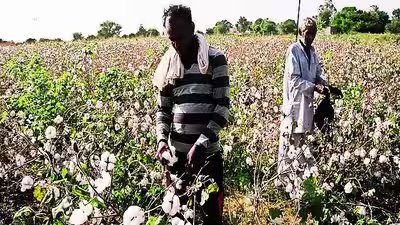
Cotton is known as “white gold” due to its immense economic importance in India. It supports the livelihoods of approximately 6 million cotton farmers and provides employment opportunities for another 40-50 million processing and trading workers. It is also a major foreign exchange earner from exports of fibres, yarns, fabrics and garments.India occupies a unique position in the global cotton economy:
- Cotton planting area ranks first in the world
- Ranked second in the world in terms of production and consumption
- The only country to grow all four recognized cotton varieties
- Accounts for nearly one-fifth of global fiber production
how it works
- Breeds and Hybrids: India grows all four species of cotton: G. Arboreum and G. Herbaceum (Asian cotton), G. Barbadense (Egyptian cotton) and G. Hirsutum (American upland cotton). G. Hirsutum accounts for nearly 90% of India’s hybrid cotton, and all Bt hybrid cotton grown in the country belongs to this variety.
- Bt cotton: Bt refers to Bacillus thuringiensis, a soil bacterium. Bt cotton has been genetically modified to carry genes from this bacterium that make it resistant to bollworms. Launched commercially in 2002, it reduced bollworm damage and reduced reliance on insecticide sprays, which improved farm income over time.
- Staple length: Cotton fibers are classified by staple length, which determines quality and use, ranging from short staple (20 mm and below) to extra-long staple (32.5 mm and above). Complete range of products manufactured in India.
- Cultivation mode: About 62% of India’s cotton is rain-fed, while the remaining 38% is produced through irrigation. The output is calculated in packages, one package equals 170 kilograms.
- Geographical distribution: Cultivation is concentrated in nine major states in three regions:
- Northern region: Punjab, Haryana, Rajasthan
- Central area: Gujarat, Maharashtra, Madhya Pradesh
- Southern District: Telangana, Andhra Pradesh, Karnataka
Orissa and Tamil Nadu also grow cotton outside these regions.
Governing Body and Plans
- Cotton Corporation of India (CCI): Minimum Support Price (MSP) operating node agency. When the market price is below MSP, it steps in to purchase cotton. Its procurement network has expanded from 508 centers in 2024-25 to 571 centers in 2025-26, covering 152 districts in 11 states.
- Commission on Agricultural Costs and Prices (CACP): Recommended cotton MSP for each cotton year (October to September), covering medium-staple and long-staple seed cotton (kapas). The goal is to ensure that farmers receive at least 50% return on production costs.
- Cotton Productivity Mission: A five-year mission will be launched in 2025-26 at a cost of Rs. 5,659.22 Crores. It focuses on developing climate-resilient and pest-resistant cotton varieties, with a particular focus on extra-long staple (ELS) cotton. It follows the “5F” vision: Farm, Fiber, Factory, Fashion, Foreign. The mission aims to increase production from 297 million bales to 498 million bales by 2031, covering 2.4 million hectares of land in 140 districts across 14 states, benefitting approximately 3.2 million farmers.
- Cotton Special Project (NFSM): The project, running in eight major cotton states from 2023-24, showcases technologies such as high-density planting systems and closely spaced planting systems. Field trials recorded yield increases of approximately 40% under HDPS and more than 32% under closer spacing.
- Kapaski San App: A mobile application for MSP procurement that allows farmers to self-register, book procurement slots, receive Aadhaar linked payments and get real-time SMS updates. More than 4.1 million farmers have registered on it.
- Kasturi Mian Bharat: Branding and Traceability Program implemented with Ministry of Textiles, CCI and TEXPROCIL with total expenditure of Rs. 300 million rupees. It certifies long-staple (28 mm and above) and ELS cotton (35 mm and above) using QR code-based, blockchain-enabled traceability, positioning Indian cotton as a global quality mark.
India’s position
- Cotton production in 2025-26 (tentative) is 29.091 million bales and domestic consumption is 328 million bales.
- MSP for 2026-27 is Rs. Medium staples Rs 8,267 per quintal Long staple cotton price was Rs 8,667 per quintal, increased by Rs. Both were up 557 points from the previous year.
- Cotton exports in FY25 were valued at USD 11.49 billion, with the United States being the largest destination (26.35%), followed by Bangladesh (19.81%) and Sri Lanka (5.11%).
- In addition to textiles, cottonseed can be used to produce cooking oil (known as “heart oil” because of its polyunsaturated fat content), animal feed, biomass fuel from straw, and surgical cotton from short fibers.
preliminaries fact box
power problem
“Cotton is often referred to as India’s white gold, but productivity remains a challenge compared to global peers.” Examines factors affecting cotton productivity in India and discusses the effectiveness of recent government interventions in addressing these issues. (250 words)
test yourself
1. Which of the following cotton varieties accounts for nearly 90% of hybrid cotton production in India?(a) G. Arboreum (b) G. Herbaceum (c) G. Hirsutum (d) G. BarbadenseAnswer: (3)2. Consider the following statements:
- India ranks first in cotton cultivation area in the world.
- India ranks first in cotton production in the world. Which of the above statements are true?
(a) Only 1 (b) Only 2 (c) 1 and 2 (d) Neither 1 nor 2Answer: (1)3. The minimum support price for cotton is recommended by which of the following agencies?(a) Cotton Corporation of India (b) Agricultural Costs and Prices Board (c) Ministry of Textiles (d) TEXPROCILAnswer: (b)4. The main objectives of the “Kasturi Cotton Bharat” initiative are:(a) Providing crop insurance to cotton farmers (b) Traceability, certification and branding of Indian cotton (c) Free distribution of Bt cotton seeds (d) Formulation of cotton MSPAnswer: (b)5. Which of the following pairs of states and cotton areas is the correct match?(a) Telangana – Northern region (b) Gujarat – Southern region (c) Punjab – Northern region (d) Maharashtra – Southern regionAnswer: (3)
Five key terms to remember
- Kapas – Unginned seed cotton, the original form declared by MSP.
- Bt cotton – transgenic cotton carrying the bollworm-resistant gene of Bacillus thuringiensis.
- Staple Length – The average fiber length of cotton, used to classify quality (short staple to extra long staple).
- Bale – The standard trading unit of cotton, equal to 170 kilograms.
- ELS Cotton – extra long staple cotton with a staple length of 32.5 mm and above, winner of the Quality Textile Award.
Quick Q&AQ: Why is cotton called “Platinum”?As it plays an important role in employment, livelihood of farmers and foreign exchange earnings through textile exports.Q: What is the difference between MSP and market price?MSP is a guaranteed minimum price set by the government, while market prices fluctuate based on demand and supply. When the market price is lower than the MSP, procurement agencies such as CCI will buy on the MSP.Q: Despite the many benefits of Bt cotton, why is it still controversial?While it reduces pest damage and pesticide use, concerns remain about seed costs, pest resistance over time, and the regulatory approval process for new genetically modified traits.