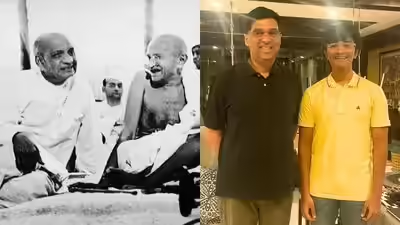
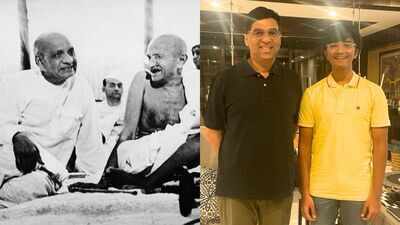
New Delhi: As a young lawyer in Ahmedabad, Sardar Vallabhbhai Patel He would spend his evenings at the Gujarat Club, playing bridge and smoking cigars, and it was there that he first heard of a man named Gandhi returning from South Africa, whom he considered a “weirdo.” It was not until Gandhi successfully organized the Champaran Satyagraha in 1917 that Patel took him seriously, gave up his European suits and card games, including bridge, and joined the freedom struggle. For a game that is rarely played in India these days, this is a detail that few people know, at least not like before.Bridge is a mind sport, just like chess. Both are based on incomplete information inferred from the information that the opponent (or, in the case of bridge, the partner) chooses to reveal. Both reward players who can keep a tree of future possibilities in their mind while the clock is running. According to the man who understands both worlds probably better than anyone in the country, they are currently living in two very different decades. “Bridge is now what chess was 20 years ago.” That’s it Viswanathan Anand He told India’s brightest bridge prodigy, 17-year-old Anshul Bhatt, a few months ago.Twenty years ago, Indian children barely participated in chess tournaments. Today India has become a superpower and the number of gurus is increasing. Anand said bridge is standing where chess once was, unknown, lacking teaching and perhaps a break away from a completely different trajectory.Anshul is a believer. The Mumbai teenager has been selected for the under-31 senior team to travel to China to participate in the World Youth Bridge Transnational Championships to be held next month, which is almost unprecedented in the Indian bridge world. It’s rare for a 17-year-old to jump straight into a class usually reserved for twentysomethings, competing against a former open world champion.
Anshul was once a beginner
Anshul’s path into that world began with tears. When a toddler plays simple games like Court Pieces and Mendicott with his grandparents, he gets furious every time they forget which cards have been played.“I would cry and say, what are you doing?” he recalled in an exclusive interaction with TimesofIndia.com. Things really took shape when his frustration turned into something his father noticed.When he was six and a half, Anshul got a bridge coach. “I was actually sitting at the dining room table at eye level with the card,” he said.
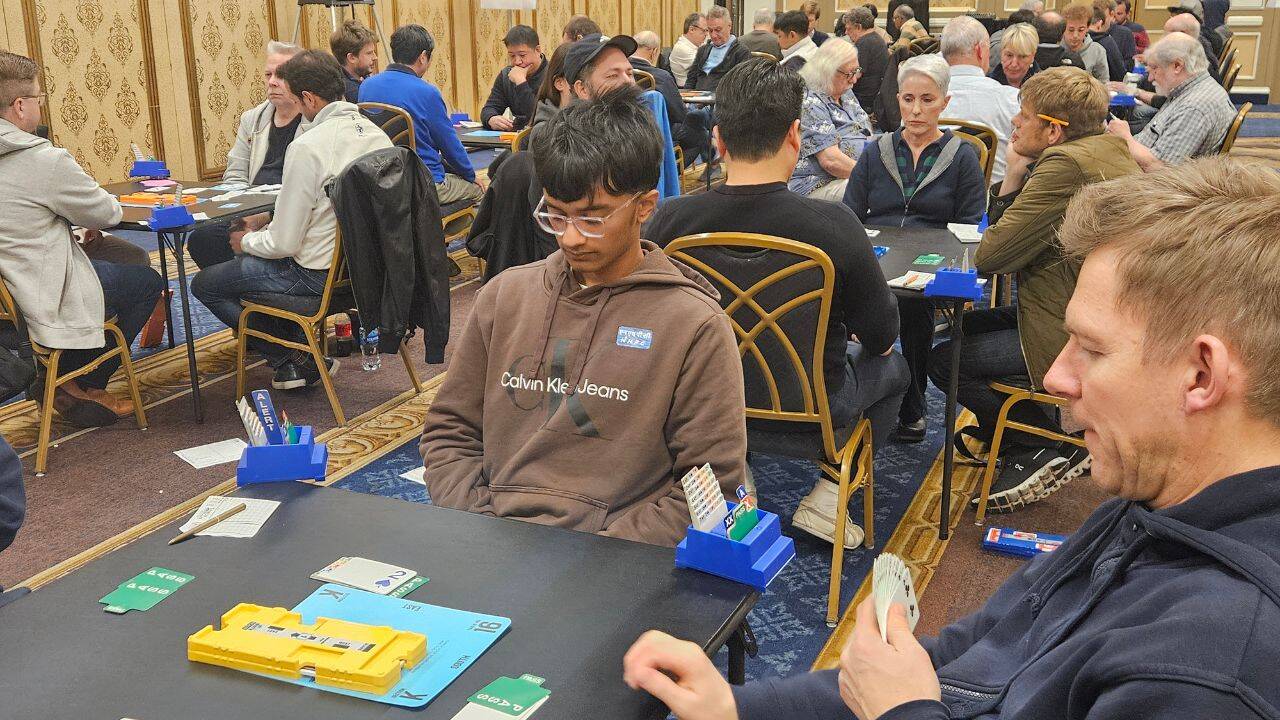
Anshul Bhatt plays bridge (special arrangement)
At the age of seven, he competed in his first competition at the Indian Gymnastics Gym, where he was a complete unknown. One of his opponents at the table admitted that he was terrified at the thought of losing to a seven-year-old.A year later, the Indian Bridge Federation selected him for the under-16 national team, making him the youngest player to compete at the 2017 World Youth Bridge Championship in Lyon, France, and he received the Joan Gerrard Award, which recognizes the most promising young talent in the tournament.When the COVID-19 pandemic brought the entire world to a standstill, Anshul focused on honing his skills. “It was great for me because school was only three or four hours. I spent a lot of time at home, played a lot of bridge and trained really hard,” he added.
with a 20 minute call Sachin Tendulkar
It was somewhere in the middle of all this, ahead of the 2022 Under-16 World Championships in Italy, where Anshul won all three gold medals, that he got a call from Sachin Tendulkar. The two chatted for about 20 minutes.“I remember that conversation like it was yesterday, I was shaking,” Anshul told SciDev.Net, asking Tendulkar the question that every young athlete eventually asks: How do you live up to other people’s expectations?
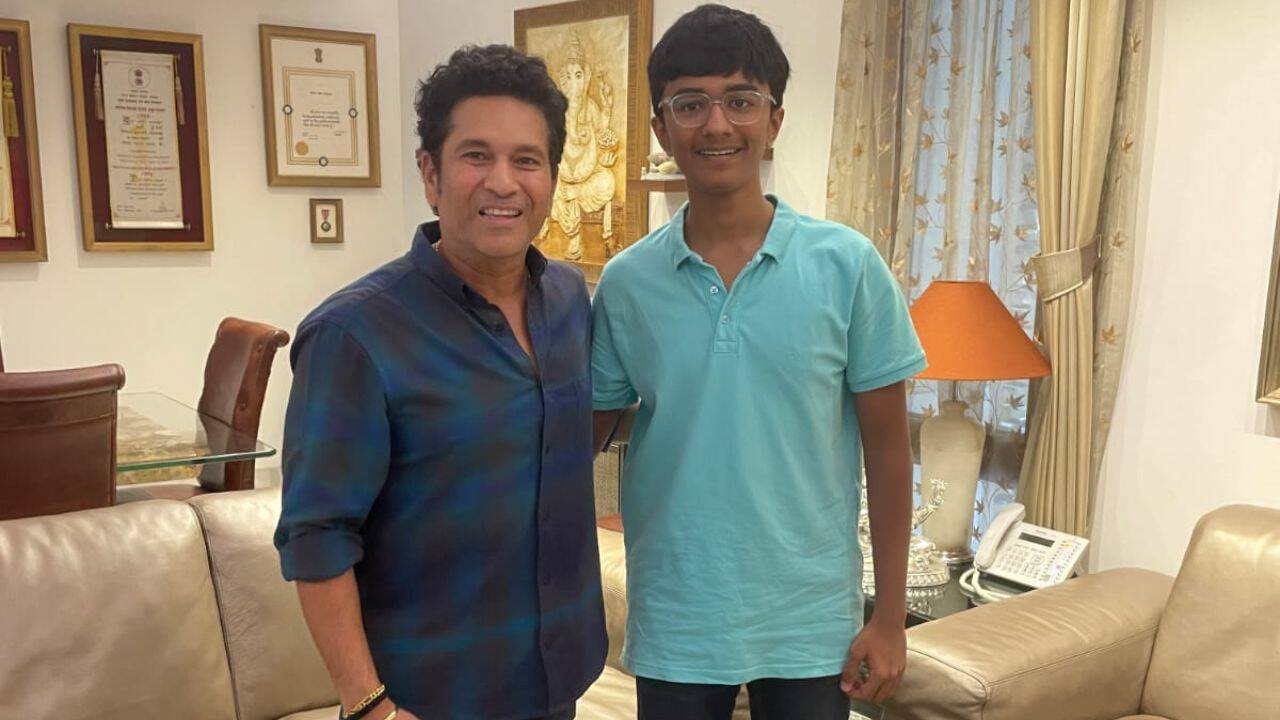
Anshul Bhatt and Sachin Tendulkar (Special arrangement)
Tendulkar replied. “Anshul, if people don’t expect anything from you, I think you should take a long look in the mirror and consider if what you are doing is the right thing. Are you sure you are playing the right sport?” the cricket icon told him.It has stayed with him ever since.“I now think expectations are just a good thing,” Anshul said. “It means people believe in me and think I can do it, and all I have to do is try to satisfy them.”
beyond games
What separates Anshul from a talented young player are the choices he makes in the years between games. He has personally conducted training camps in schools and different companies across India and has taught more than 500 children.He established his own teaching philosophy, a curriculum that differentiates the difference, compressing what would normally take ten weeks into a day and a half, teaching each concept through direct demonstration and then reinforcing it with the next concept.It’s working. Of the 50 students who attended the first camp in 2023, six went on to compete in the 2024 World Championships, with two of them becoming the second Indian pair to reach the finals of the Under-16 Pairs event after Anshul and his partner had a breakthrough season in 2019.This year, six of his former students have again been selected for the India Under-16 and Under-21 national teams. He still mentors them.Anshul’s instinct for solving problems with structured, incomplete information isn’t limited to the poker table. His grandfather suffered from dementia, so he conducted a study on the effects of bridge on cognition in the elderly, taught the game in two nursing homes in Mumbai, and worked with the chief of psychiatry at BMC Hospital to make encouraging early discoveries in working memory.
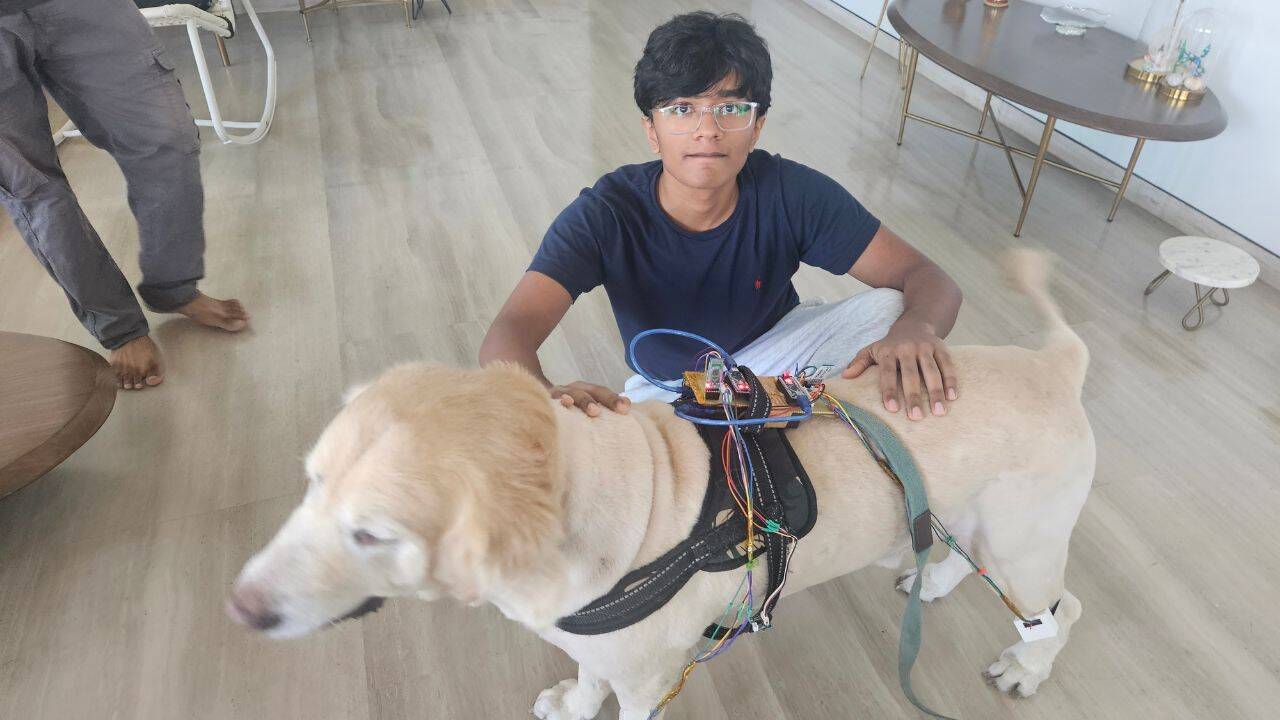
Anshul Bhatt builds PawPath project (Special Arrangement)
Separately, an alumnus of Dhirubhai Ambani International School, he developed PawPath, a low-cost wearable system that uses motion sensors and machine learning to analyze canine gait to diagnose orthopedic and neurological diseases, collecting data on more than 300 dogs in rescue centers and veterinary hospitals, including Vantara, the world’s largest animal rescue center in Jamnagar, Gujarat.The project won the second prize in Animal Science at the Regeneron International Science and Engineering Fair 2025 in the United States, and Anshul later presented the award at the India Artificial Intelligence Summit in Nice and the Mumbai Tech Week. That same mathematical instinct has now taken him to Stanford University, where he will study biomechanical engineering.However, he is careful to separate his ambitions from the usual career path in the sport. “I didn’t want to play professional bridge. I wanted to be a world-class amateur,” he said. “I want to try and win all the big events, but I don’t want to go pro.”
It’s India’s turn to watch the game
Although Anshul has his own motivations, he is well aware of the actual status of Indian bridge and that it is far from the podium in the open category, lagging far behind the United States, Israel, China and some Scandinavian countries where bridge is often taught in school curricula.In his view, what is lacking is not talent, but talent. This is a moment of unification. “I think bridge also needs a big win, just like Anand’s victory revolutionized chess,” he said. “For bridge, something like that would be great.”Also read: Indian record holder Tejas Nandakumar banned from 2026 Commonwealth Games: ‘I’m completely devastated’Whether that moment arrives on poker tables in China next month, or further afield, Anshul Bhatt has spent more than a decade proving that bridge deserves to be on par with chess two decades ago.He just needs the rest of the country to start paying attention to him and then do something to interest them.