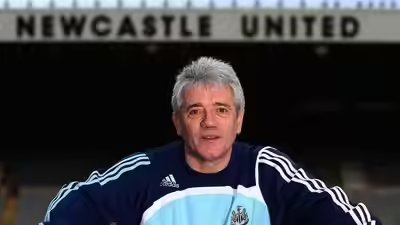
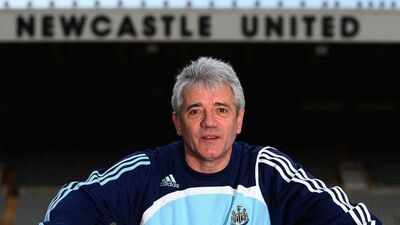
Kevin Keegan, one of the most famous figures in British football, has died aged 75. His family confirmed the news on Monday, revealing that he had been battling cancer since being diagnosed earlier this year. A double Ballon d’Or winner, a Liverpool great and the man who gave Newcastle the title of ‘The Entertainer’, Keegan has left a legacy that will take generations to fully appreciate. Alan Shearer simply said on social media: “My hero. My manager. My friend. Sleep well, boss.”
How did Kevin Keegan die? What was the cause of his death?
Kevin Keegan had been dealing with abdominal symptoms for some time before his family went public with his condition in January. Further medical evaluation confirmed many people’s fears. By June, Keegan himself revealed that he had been diagnosed with stage 4 cancer, the most advanced stage that indicates the disease has spread beyond its origin.He died seven weeks after the public disclosure. A family statement confirmed he was “surrounded by his wife and daughter in his final moments.” The statement described him as “a much-loved husband, father and grandfather” and asked for privacy during what it called an “extremely difficult time.” His medical team received special thanks in the announcement.
What has Kevin Keegan accomplished as a player and coach?
Kevin Keegan arrived at Liverpool in 1971, signed by Bill Shankly from Scunthorpe United for £33,000. The next six years laid the foundation for his remarkable career. He won three First Division titles, an FA Cup, two UEFA Cups and the 1977 European Cup at Anfield. Then it was on to Hamburg, where he won the Bundesliga title and achieved something no English player had done before or since: win the Ballon d’Or back-to-back in 1978 and 1979. He remains one of only four British players to win the award.At international level, Keegan played 63 games for England between 1972 and 1982, scoring 21 goals. He then became the head coach of the national team in February 1999 and led the England team to the 2000 European Cup. His tenure ended with his resignation after a World Cup qualifying defeat to Germany at the old Wembley Stadium.His most influential chapter as a manager came at Newcastle. In 1992, he led the team out of the relegation dilemma of the First Division and transformed the team into a strong contender in the Premier League within four years, finishing runners-up in the 1995-96 season. His Newcastle team played football that captivated the nation. He later played for Fulham, Manchester City (2001 to 2005), and briefly returned to Newcastle in 2008.
Who is Kevin Keegan outside of football?
Off the pitch, Keegan became truly famous in a way that few modern footballers experience. He was the spokesman for Brut 33, released hit singles and became a fixture in British pop culture in the 1970s. His appeal extends far beyond fans.Newcastle United said in its speech that Keegan’s impact “will forever remain in the memory he created for club and country, inspiring dreams wherever he went.” Liverpool said his “indomitable spirit and outstanding contribution will forever be etched in the club’s history.” Manchester City praised him for helping the club become a Premier League club during his four years in charge.Current Newcastle manager Eddie Howe even contacted Keegan when he took over in 2021, seeking insights into what it would take to succeed at the club.