
England’s dramatic 2026 FIFA World Cup quarter-final victory over Norway was overshadowed by controversy after Jude Bellingham’s first-half equalizer sparked debate over possible deformation of camera cables. Now, FIFA has dealt directly with the incident, confirming that its ball-connecting technology found no evidence of the ball coming into contact with overhead wires, explaining why the goal was correctly allowed to stand. The governing body also released data supporting the sensor system built into the match ball after TV footage sparked speculation England’s equalizer had been ruled out.
Why this target is under scrutiny
England eventually beat Norway 2-1 in extra time in Miami to advance to the World Cup semi-finals, but the biggest talking point came from Jude Bellingham’s equalizer in first-half stoppage time. Norway took a deserved lead in the 36th minute through Andreas Schjelderup, before England hit back in the 45th+2 minute. The move began with a long goal kick towards midfield, with Harry Kane winning possession behind Anthony Gordon. Gordon then played a brilliant through ball to Jude Bellingham, who took two touches before calmly beating Neyland to level the score at 1-1.
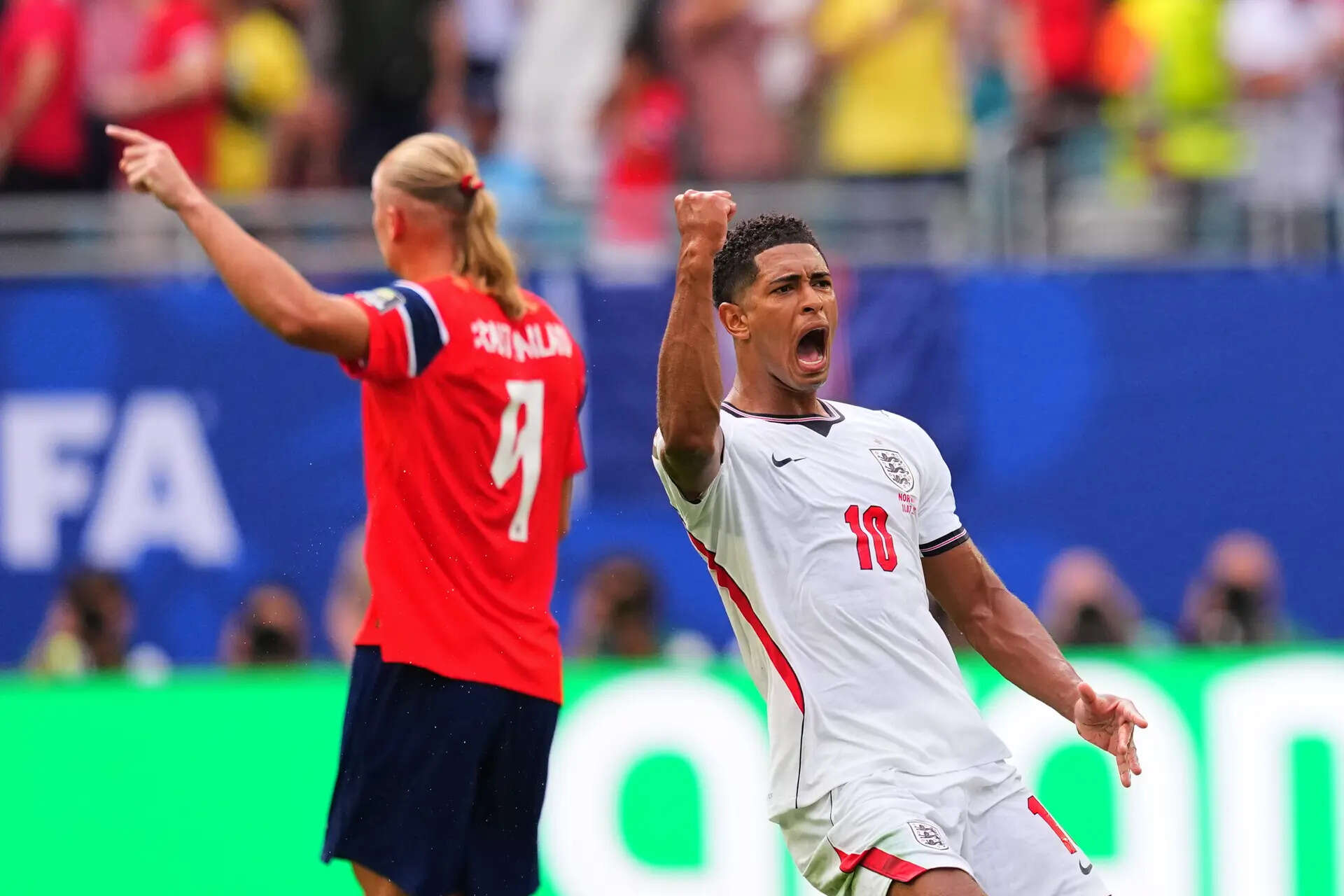
England’s Jude Bellingham celebrates his team’s first goal against Norway during their World Cup quarter-final football match on Saturday, July 11, 2026 in Miami Gardens, Florida. (AP Photo/Julio Cortez)
Video aired on Fox Sports appeared to indicate that Nyland’s goal kick may have cut one of the spider camera cables hanging above the field. Clear contact appeared to change the ball’s trajectory before it fell into the path of Harry Kane, allowing England to regain possession and launch an attack that ultimately led to Bellingham’s equalizer.After the original Fox Sports video was geo-locked in the United States, journalist Melissa Reddy retweeted the clip, bringing the incident to wider attention. Some spectators thought the ball’s flight direction changed after contact. The incident quickly became one of the game’s defining controversies, with the Norwegian players and coach Storbakken visibly frustrated as they walked down the tunnel. Erling Haaland also gestured to the referee to indicate he believed the ball had hit the overhead camera system.
Why cable touch is important
According to the International Football Association Board (IFAB) rules of the game, if the ball hits an overhead fixture, including camera cables or hanging wires, the referee must stop play immediately. The correct restart would be to drop the ball where the contact occurred. Former FIFA referee Mark Clattenburg, who served as a refereeing analyst for Fox Sports during the game, explained that since the incident was part of an offensive phase that directly led to a goal, VAR would have the power to intervene if there was evidence of contact. Clattenberg said: “If the contact of the ball with the camera cable is part of a reviewable incident then VAR may intervene.” “The attacking phase leading to a goal is part of the VAR reviewable events. “It should have been picked up by VAR.” However, the discussion hinges on a key question: Did the ball actually touch the cable?
FIFA releases online football record
After the game, FIFA confirmed that the incident had been reviewed using the tournament’s ball-matching technology. Every official match ball contains an internal sensor that continuously records movement, trajectory and every physical contact with the ball. The system generates what FIFA calls a “heartbeat” of the ball, producing visible spikes whenever contact occurs. According to FIFA, no such smash was recorded when Nyland’s goal kick passed under the overhead camera system. FIFA said in a statement: “Prior to England’s 45+2 minute goal against Norway, sensors in the connected ball showed that the ‘ball’s heartbeat’ did not peak while in the air, so there is no evidence that the ball came into contact with overhead wires and altered its movement.” The governing body also released data from a Snicko-style tracking system, which similarly showed no contact was detected as the ball traveled through the air. In the absence of any evidence of contact, neither the referee nor VAR had a reason to stop play, meaning England’s equalizer still stood.
England progress despite dramatic night
The debate ultimately did not decide its outcome on its own. Norway thought they had regained the lead in the second half when Torbjörn Hegem scored, but VAR disallowed the goal after determining Erling Haaland had fouled Elliot Anderson earlier. England eventually sealed the win early in extra time, with Bellingham reacting fastest after Morgan Rogers’ long-range shot was saved by Nylander, scoring twice to help Thomas Tuchel’s side reach the World Cup semi-finals.
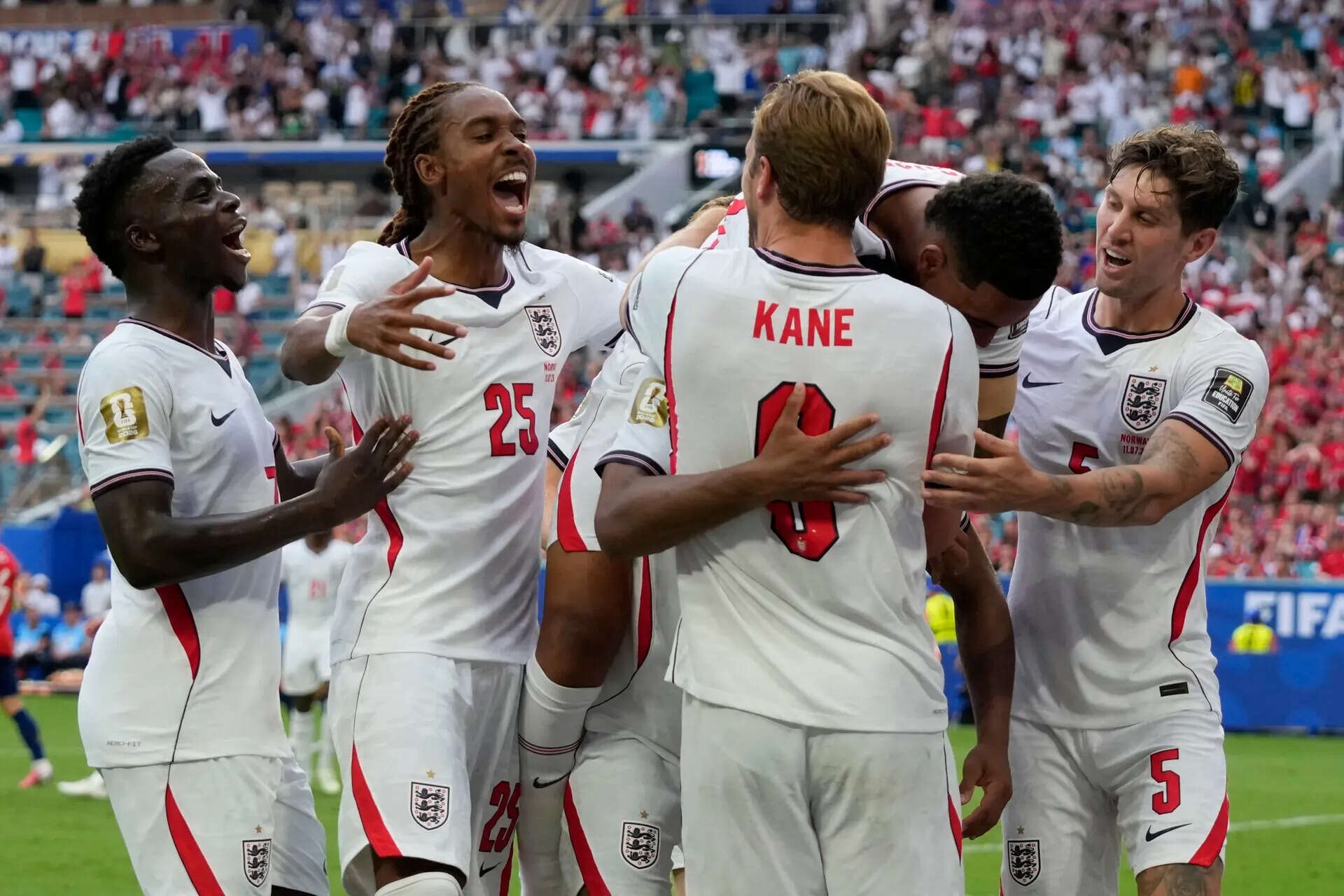
England players congratulate Jude Bellingham after scoring his team’s second goal during their World Cup quarter-final football match against Norway in Miami Gardens, Florida, Saturday, July 11, 2026. (AP Photo/Lynne Sladky)
Then in extra time, VAR intervened again, this time overturning the penalty originally awarded to England for a foul on Jed Spence. While the debate initially centered on whether Bellingham’s first goal should have stood, FIFA’s explanation – and data from its Connect Ball technology – has now given the governing body a clear answer: There was no evidence the ball made contact with an overhead camera cable, despite appearing from a TV angle, and England’s equalizer was correctly allowed to stand.