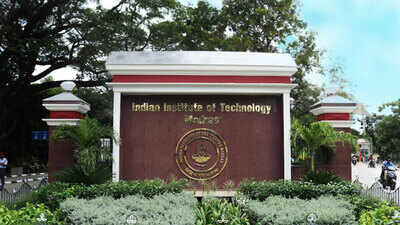
Indian Institute of Technology Madras and Kanpur jointly launch India’s first practice-oriented four-year bachelor’s degree program in cyber security (B.Cyber).) program, which will begin with the school year starting in July 2026. The undergraduate program was launched to meet the growing demand for trained cybersecurity professionals and combines academic learning with extended practical training.The program is designed to prepare students to secure India’s expanding digital infrastructure, strategic sectors and emerging cyber ecosystems. Admissions to the program are jointly conducted by IIT Madras and IIT Kanpur. Graduates will be prepared for careers in areas such as cyber defense, security operations centers, penetration testing, vulnerability assessments, digital forensics, malware analysis, cloud security, hardware security and critical infrastructure protection, while also laying the foundation for higher-level study and research.
Cybersecurity identified as national priority
Cybersecurity has become a national strategic priority as digital transformation expands into governance, finance, healthcare, transportation, telecommunications, manufacturing and defense. Industry estimates cited by the agencies indicate a nationwide shortage of nearly 1.5 million cybersecurity professionals, underscoring the need for specialized undergraduate education in the field.The program introduces a practice-oriented model that combines classroom teaching, laboratory training and professional engagement with real-world cybersecurity systems and challenges throughout the degree.
Two years of field deployment form the core of the course
A key feature of the program is a two-year field-deployed professional project. During the final four semesters, students will work on real-time cybersecurity projects under the guidance of professionals from strategic and critical organizations. The goal is to ensure that graduates enter the workforce with both practical experience and academic preparation.Competency-based courses cover security operations, vulnerability assessment and penetration testing, secure systems, malware analysis, firmware reverse engineering, hardware security, cloud security and critical infrastructure security. Students can also choose from advanced electives including digital forensics, embedded systems security, secure processor microarchitecture, and applied cryptography.
Focus on lab-based learning
The first two years will emphasize laboratory-oriented learning in computer systems, programming, Linux system administration, cryptography, computer organization, operating systems, computer networking, ethical hacking, network security, vulnerability assessment, and penetration testing before students advance to advanced specializations and field deployments.Highlighting this initiative, Professor V. Kamakoti, Director of IIT Madras, said, “Cybersecurity has become the foundation of India’s technological sovereignty and national security. Building a resilient cyber ecosystem requires professionals to possess not only a solid theoretical foundation but also rich practical experience in defending complex systems.”