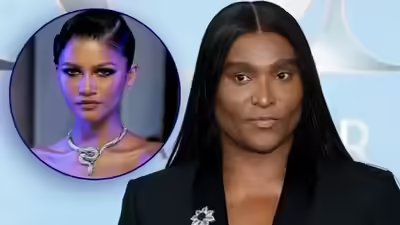
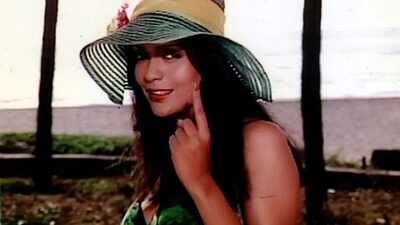
veteran actor Zeenat Aman She was one of the biggest stars of the 1970s, earning labels such as “sex symbol” and “bold” actress for her glamorous and unconventional roles on screen. Although these roles defined her public image for decades, Zeenat said they never reflected her true identity. In a recent interview, she discussed the disconnect between her on-screen persona and her real personality, while also recalling filmmakers who were more interested in her appearance than her creative input.Zeenat said in an interview Shubra Ayyappa On her YouTube channel, “I’ve always found a huge gap between people’s impressions of me and who I really am. The sex symbol label has been with me for a long time. When people meet me, they realize that I really don’t look like the character I portray. “ Looking back on working in the film industry during that period, Zeenat revealed that film sets were overwhelmingly male-dominated. Apart from the hairdresser, she was often the only woman present. Despite being the leading lady, she said she had little say in shaping the character or image because the focus was mainly on her appearance. “No one is interested in my sanity. They are only interested in gayegi, nachegi, doDialogue bolegi, bheegegi, barish mein (singing, dancing, speaking two dialogues, getting wet in the rain),” she said. Zeenat also talks about her fashion sense and how her exposure to global trends after returning to India from the US influenced her style. She said clothing designs are often the result of collaborations with famous designers, e.g. Banu Athea. However, she reveals that if anything, her own advice is often more restrained than filmmakers would like. When asked if her ideas were dismissed as too bold, Zeenat laughed and said: “On the contrary, I feel like my contributions have always been modest, and the additions people wanted were not so modest. I’ve had situations like this in a few films where they wanted more cleavage, more backside showing, and that came from the production.” The veteran actor also spoke about pay inequality in the film industry, saying the reasons behind inequality are still rooted in patriarchy. According to her, men have traditionally controlled financial decisions in commercial films, which has contributed to the gender pay gap. “Honestly, I think economic power is mainly in the hands of men. Men are in charge of finances and it’s still a very patriarchal society and any commercial cinema will cater to that,” she said, adding that while the industry has made some progress over the years, change has been gradual.